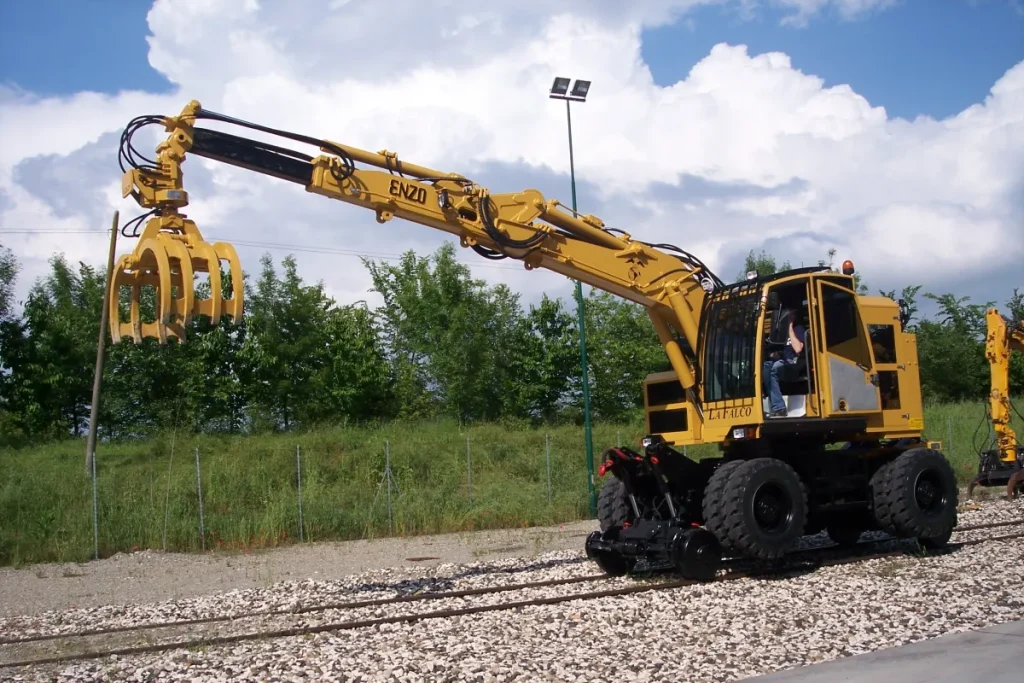
Fast and smoothly: Our Rails Loader Crane is an efficient solution to load and unload rail tracks.
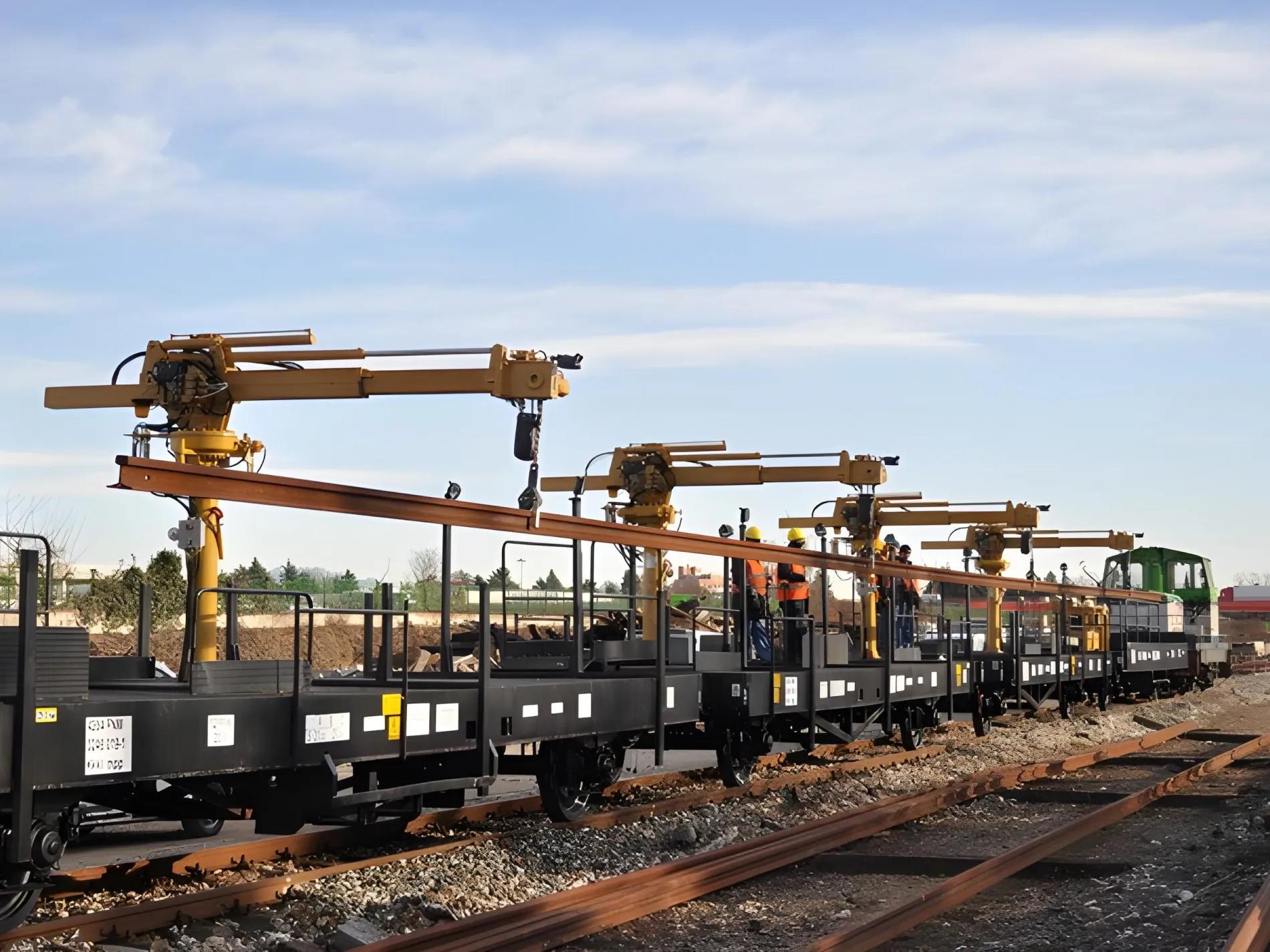
Rails loader crane is a railway equipment used to load and unload rail tracks for infrastructure and maintenance projects, like renewal and replacement. Provided with full range of hooks, our rails loader crane is not only used for track loading and unloading but also allows for handle other heavy, large-scale components, such as poles.
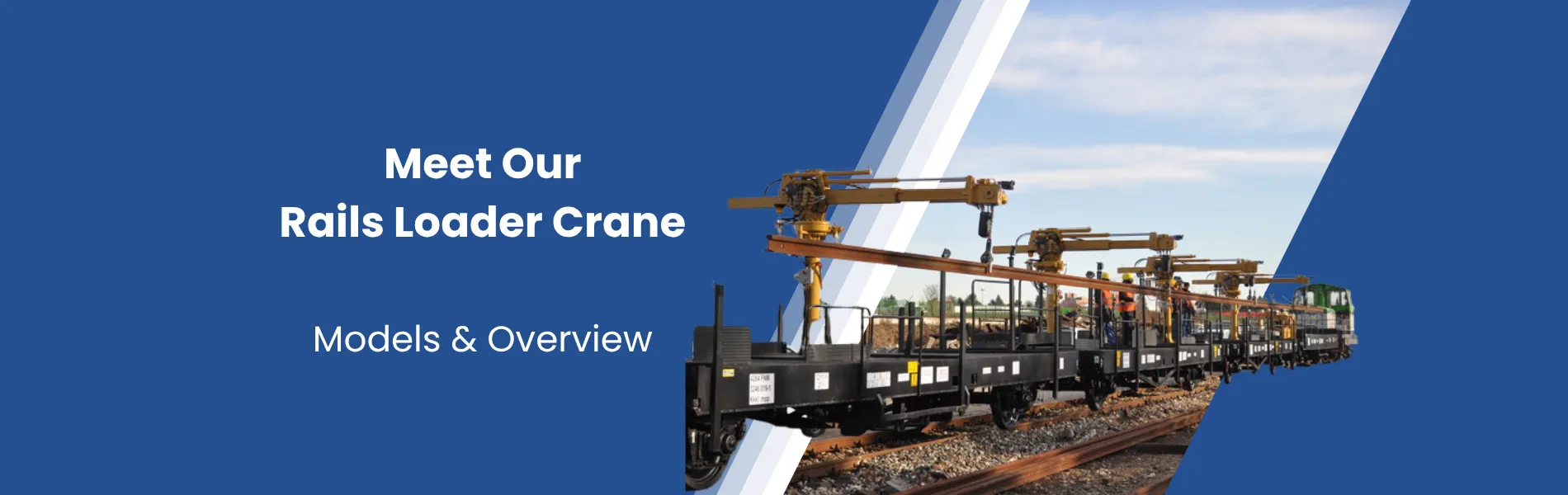
Technical Specifications |
GCR 1000 |
|---|---|
| Diesel Engine | 34 kW at 2800 rpm |
| Max. Lifting Load Capacity | 1,000 kg |
| Max. Arm Extension | 2,500 mm |
| Rotation Angle | 180° |
| Datasheet |
Whether independently or loaded onto a locomotive, position the rails loaded crane on the operation site.
Use the suitable hook and load the rail component smoothly.
Unload the rail component on wagons or the operational site.
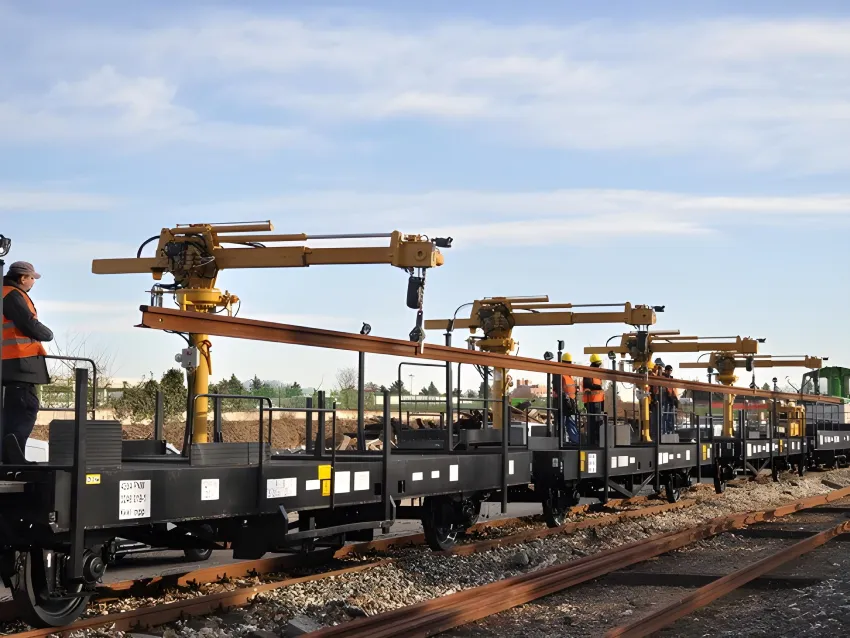
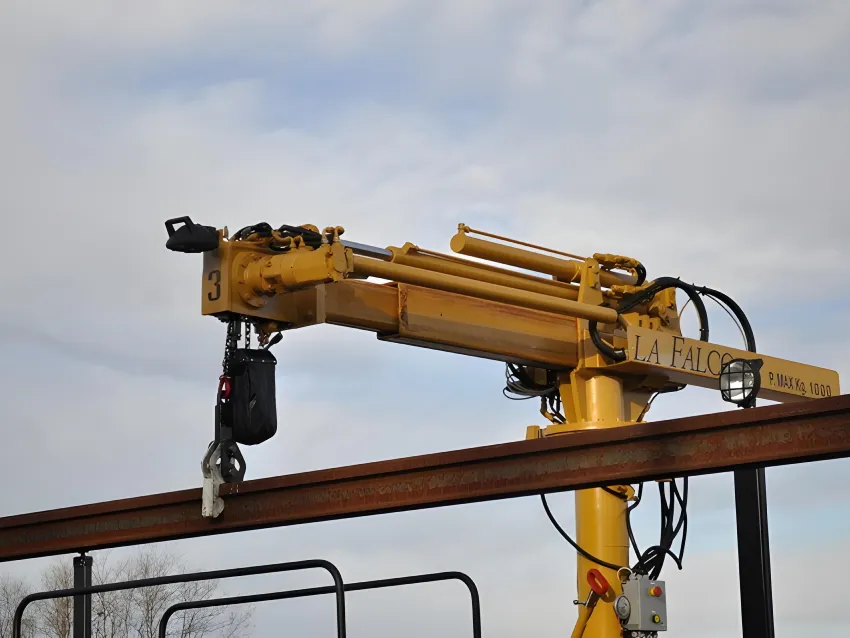
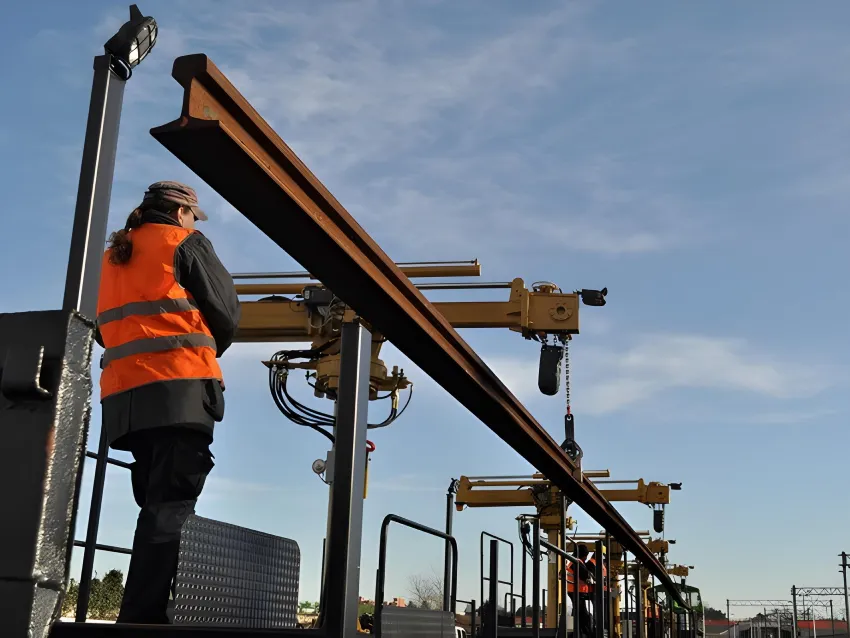
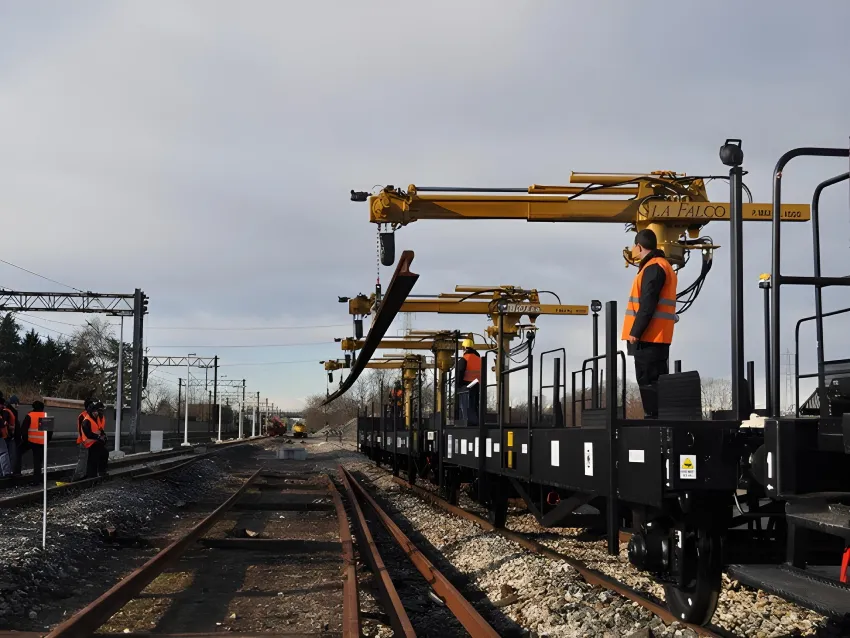
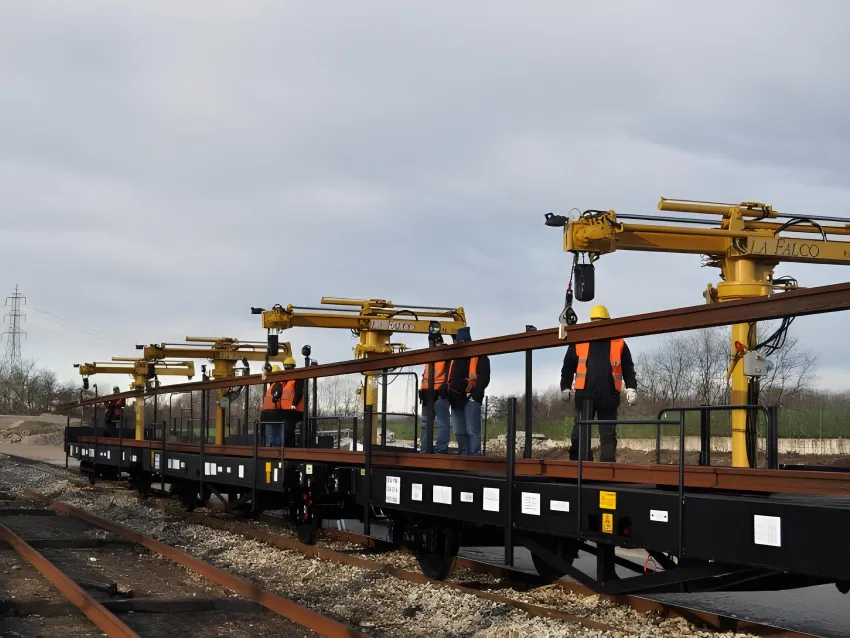
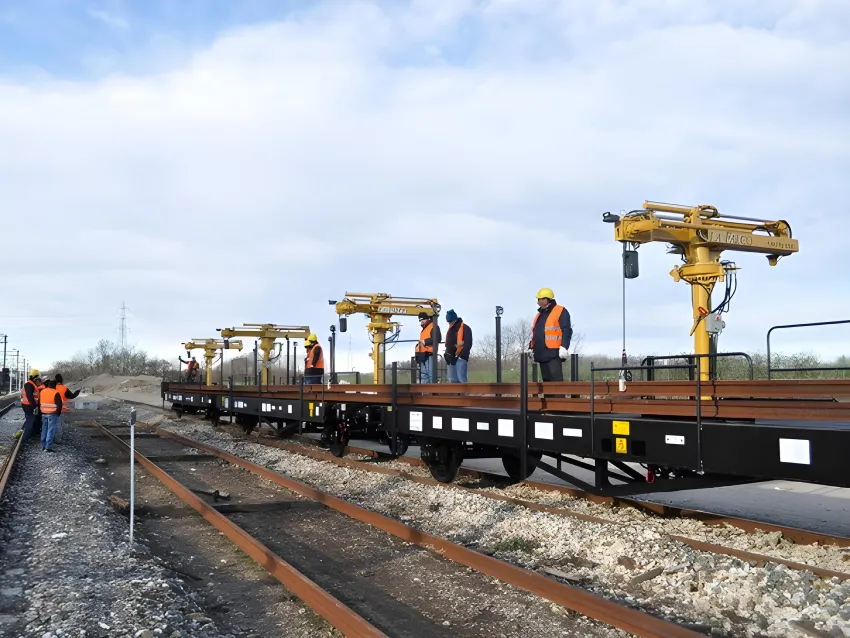
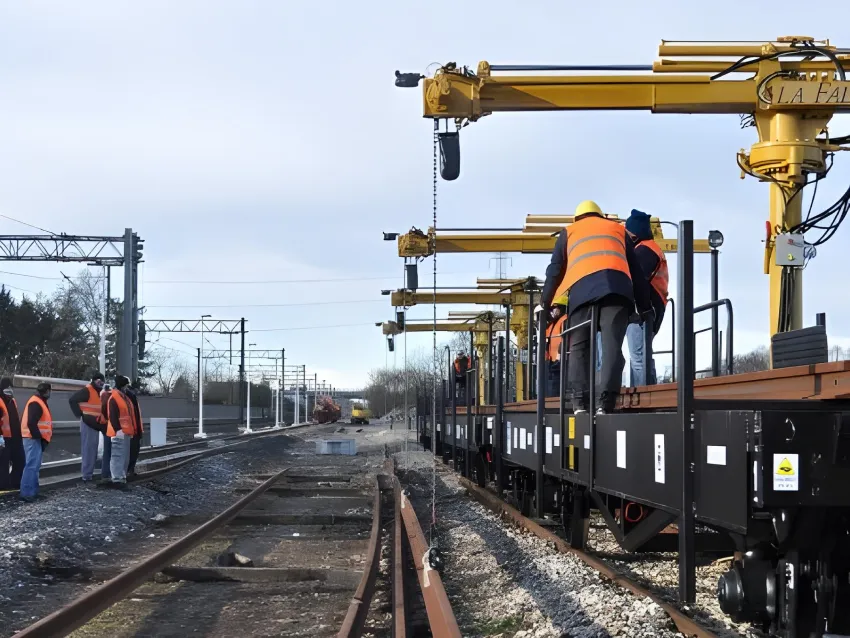
Yes. ADOR Tech’s rails loader crane can be used whether totally independently or by loaded onto a wagon or locomotive.
Train loader price widely depends on its design, features, and customizability.
Yes. ADOR Tech’s rails loader crane is designed fully customizable based on the project’s requirements and site conditions.
Rails loader crane is a key railway equipment used to load and unload rail tracks or components in construction and maintenance projects. Built with a high lifting load capacity, ADOR Tech offers a powerful train loader that is capable of loading and unloading heavy, large-scale rail components and materials smoothly and efficiently. They are also provided with diverse types of hooks, allowing for handling a wide range of rail components and materials.
Rail loader cranes are a solution for loading and unloading rail tracks in infrastructural and maintenance operations. Due to the importance of loading and unloading rail components in replacement and renewal projects, rails loader crane is counted as efficient equipment in this industry. Traditional train loaders require significant time for construction and maintenance tasks. However, modern rail loader crane incorporates advanced hydraulic systems and automation, reducing downtime and increasing worksite productivity. These technological upgrades make them indispensable in large-scale railway operations.
Rails loader crane is primarily used for rail handling, including lifting and transporting rails in railway projects. Therefore, railway construction and maintenance Therefore, railway construction and maintenance projects are one of the main cases where rails loader crane can be a super-efficient solution, installing new tracks and removing old ones smoothly. Train loader can also be used in freight and logistics operations, loading and unloading materials onto wagons. Moreover, their great lifting capacity allows rails loader crane to be used in transporting heavy equipment, such as lifting poles or other materials required in railway infrastructure projects.
Rails loader crane is necessary equipment in railway construction and maintenance operations. The more a train loader is modern, the safer and more efficient the operation will be. With technological advancements, ADOR Tech’s rails loader crane offers radio-controlled operation, allowing for precise control with fewer operators. This not only enhances safety but also boosts efficiency, ensuring faster project completion with minimal workforce requirements. By investing in our high-tech rail loader crane, railway companies can cut labor costs, improve safety, and speed up project timelines, making them an essential asset for railway construction and maintenance.
Train loader is one of the main rail handling equipment and it is crucial for it to be adapted to the site environmental conditions. By providing it fully customizable, ADOR Tech designs rails loader crane based on the project’s needs and site environmental conditions to meet the project’s challenges as possible as it can. ADOR Tech’s rails loader crane is completely adapted to the Canadian demands, offering high performance and efficiency in railway construction and maintenance operations.