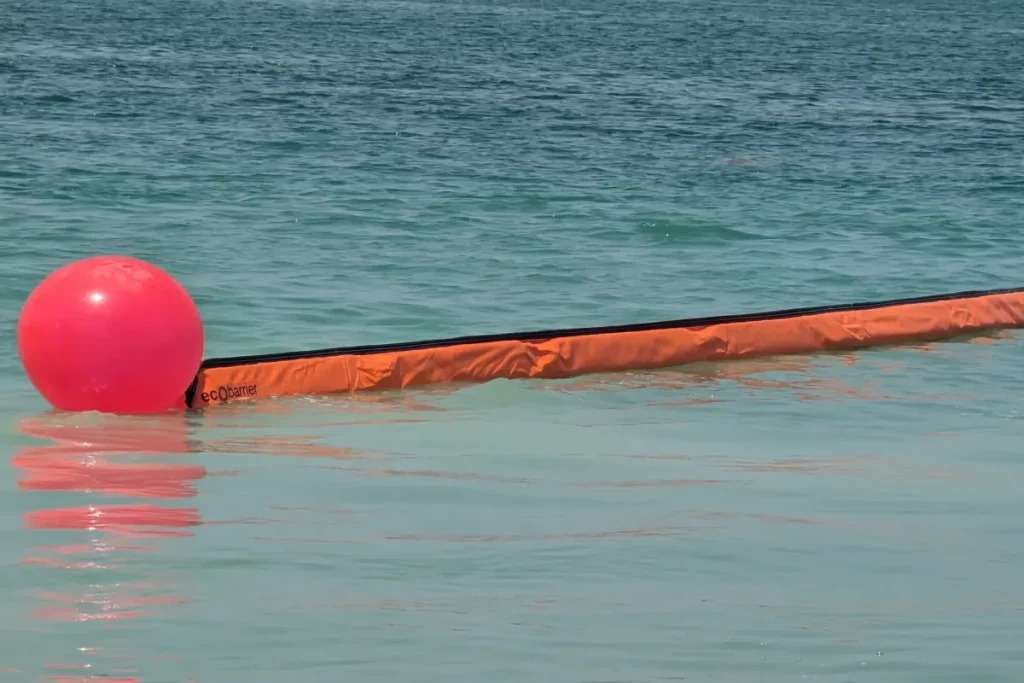
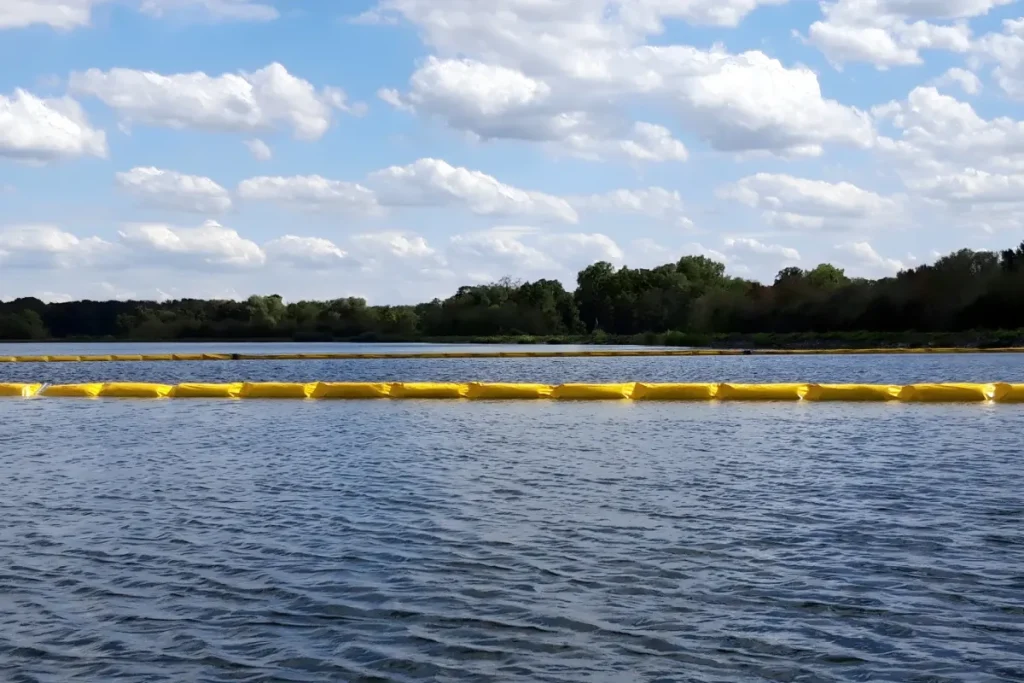
A solution to manage floating debris in marinas: Meet this fully flush-faced Debris Boom.

Debris boom is a floating barrier used to collect floating debris on the water and prevent them from spreading out. This floating barrier system can be equipped with water-level compensator at end connections, adapting the boom to inconstant water levels. Fully flush-faced design of debris barrier allows for easy debris accumulation without blocking flow.

Technical Specifications |
PDB400 | PDB600 |
|---|---|---|
| Float Size | 450 mm | 600 mm |
| Float Units Material | Polyethylene | Polyethylene |
| Float Units Filling | Polyurethane Foam | Polyurethane Foam |
| Floating Curtain | Polyester + Rubber laminate | Polyester + Rubber laminate |
| Curtain Height | 400 mm | 600 mm |
| Curtain Thickness | 2 ply 5 mm | 3 ply 8 mm |
| Datasheet | Datasheet |
Our partnerships include companies specializing in marine barriers for environmental, safety, and security purposes. Together, we are committed to setting new standards in the railway and marine industries, driving progress, and delivering exceptional value to our customers.


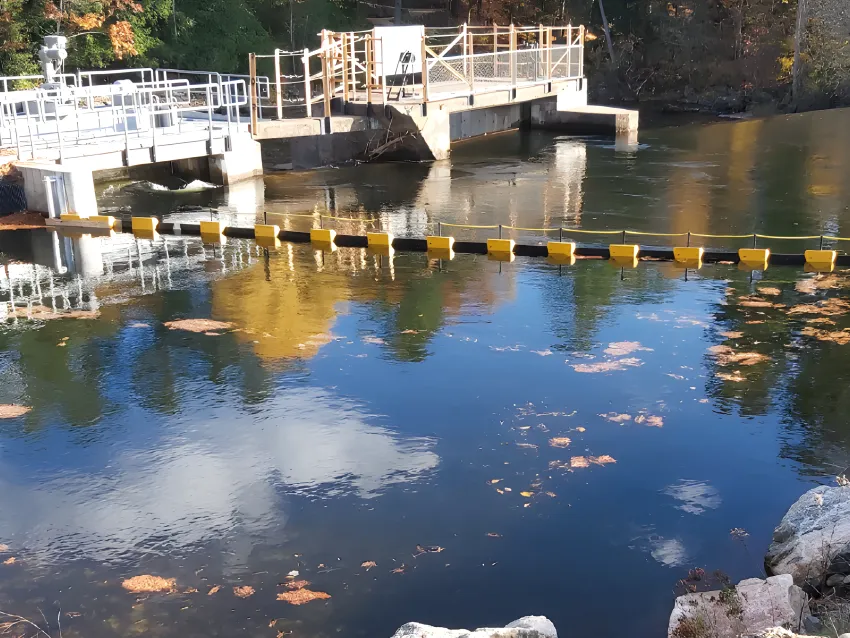
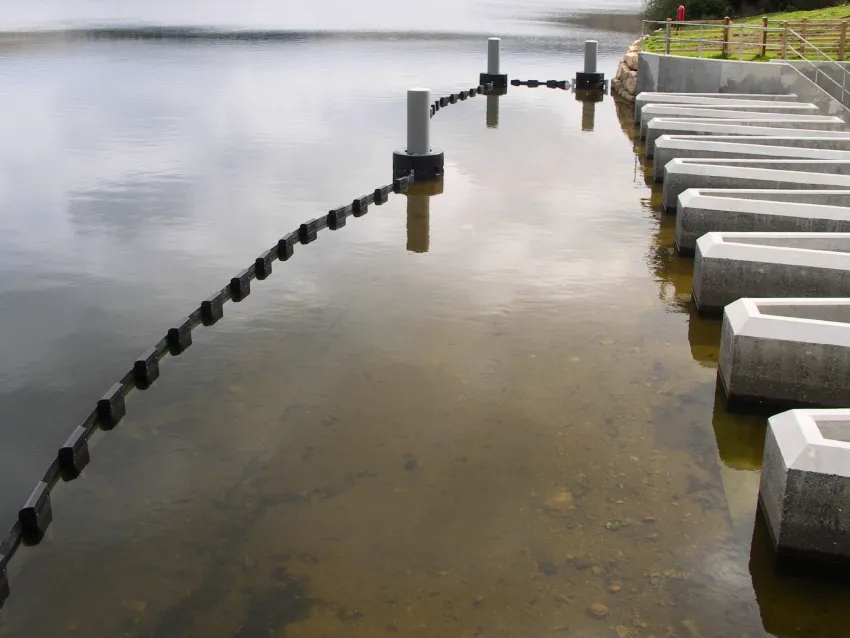


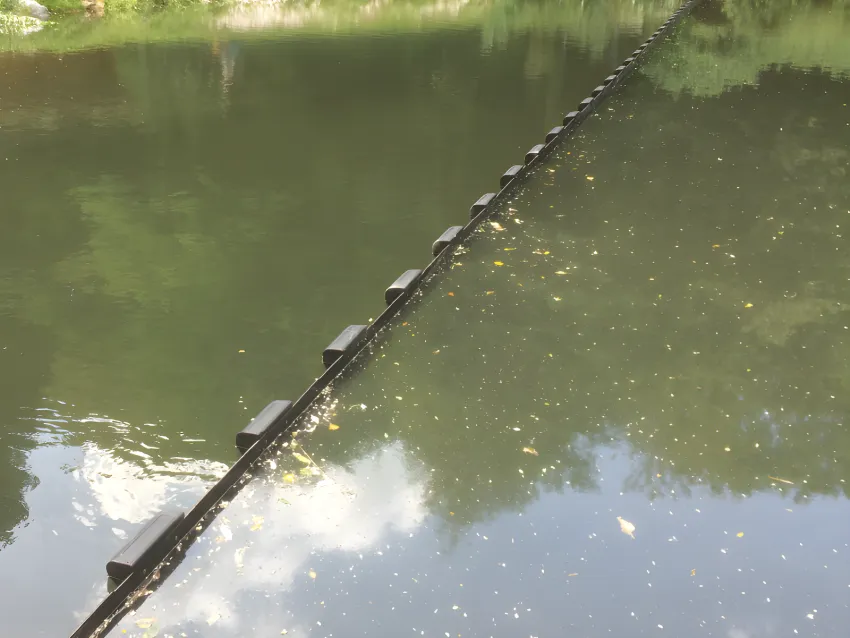

We have successfully delivered Debris Boom (PDB600), equipped with water-level compensator, to Norland in order to prevent water-caried debris from getting into the water intake screen and instead divert it over the crest of the dam.

Yes. Floating debris boom is fully customizable and can be designed with HDPE float units to be more durable and resistant in harsh environmental conditions.
Debris Barrier is provided with either yellow or black float units and black sheet or curtain connecting floating units together.
Yes. Debris floating boom barrier is fully customizable based on the project’s requirements and environmental conditions.
Debris barrier can efficiently operate on environments with medium duration waves and low to moderate tidal flow waters.
No. Floating debris barrier is designed with UV-stabilized floating units that enable high durability and resistance even under direct sunlight.
Debris boom is an efficient solution to control floating debris on the water and prevent them from spreading out. In the face of rising environmental regulations and growing concerns about marine debris, floating boom barrier has become essential infrastructure for managing floating waste in rivers, lakes, reservoirs, marinas, and industrial water bodies. This floating debris barrier plays a crucial role in protecting ecosystems, preventing blockages in critical infrastructure, and ensuring operational continuity for water-dependent facilities.
Floating debris not only pollute the marinas environment, but also can block intakes, turbines, or sluices. Using high-performance debris boom deflect waste away from critical points, ensuring smooth operations. In addition, debris containment is necessary near docks, breakwaters, and terminals to maintain safe navigation and preserve aesthetics. Moreover, floating waste and vegetation can accumulate in remote lakes or rivers, impacting water quality and wildlife. These all make floating debris boom crucial in protecting marinas more than ever.
Due to the critical role of debris barrier, it is necessary to be designed in the most efficient way possible. A fully flush-faced floating barrier system enables high containment of floating debris and trash, ensuring no leakage and passing. Customizability of free-board and height also offers maximum performance and efficiency in cases where the volume of floating debris and trash is much enough that a basic floating boom barrier cannot handle it. Additionally, the water level may change during specific times, and this matter can disrupt the operation of debris boom. To address this challenge, the floating debris barrier should be equipped with water-level or roller compensators at both end connections, ensuring efficiency even when water level changes.